










What Lens Coatings Actually Do
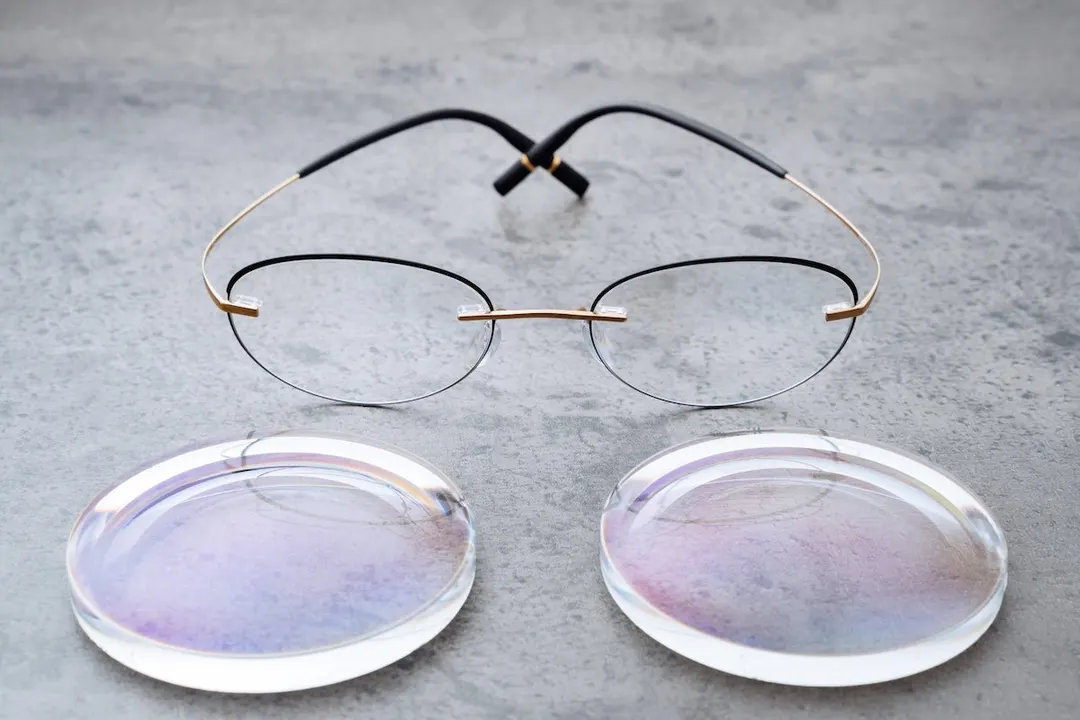
Somewhere near the end of ordering a pair of glasses, you are asked to choose your lens options. Most people either tick everything, in case it matters, or tick nothing, because the descriptions all sound the same. Neither is a decision.
Two options come up most often, and they do quite different jobs. One has a clear, well-established benefit. The other is more contested than the marketing around it suggests, and we would rather tell you that than sell you something you do not need.
Anti-glare coating
An anti-glare coating, sometimes called anti-reflective coating, is a microscopically thin layer applied to the lens surface. Its job is to stop light bouncing off the front and back of the lens instead of passing through it.
Without it, a small percentage of light reflects away at each surface. You notice this in three situations in particular:
- Night driving. Oncoming headlights, and modern LED headlights especially, throw reflections across the lens surface. The coating cuts those reflections noticeably.
- Screen work. Overhead lighting reflecting off the back of the lens creates a faint haze between your eye and the screen.
- Photographs and video calls. Uncoated lenses show as bright white discs. Coated lenses let people see your eyes.
The optical benefit is straightforward and not really disputed. More light reaching your eye means slightly better contrast, and fewer reflections means less visual clutter to ignore. For anyone who drives at night or works at a screen for long stretches, it is the option we would choose first.
One trade-off worth knowing. Coated lenses show fingerprints and smears more obviously than uncoated ones, and the coating can be damaged by abrasive cleaning. Our guide on how to clean and store your glasses covers this properly, and it matters more once you have a coating to look after.
Blue light filtering
Blue light filtering lenses reduce the amount of short-wavelength light reaching your eye. They are usually sold on two claims: that they reduce eye strain from screens, and that they improve sleep.
Here is the honest position. The evidence for the eye strain claim is weak. A substantial Cochrane review published in 2023 examined the available trials and did not find good evidence that blue light filtering lenses reduce eye strain from computer use compared with standard lenses. The reviewers also found no reliable evidence of benefit for sleep quality in the short term.
That does not make the lenses useless, and plenty of people wearing them report feeling more comfortable. It does mean the mechanism is less settled than the category's popularity implies, and that if screen fatigue is your problem, other factors are likely doing more work.
The things with better evidence behind them are unglamorous. Taking regular breaks from close focus. Blinking properly, which people do far less of while reading a screen. Adjusting screen brightness to match the room rather than fighting it. Making sure your prescription is current, since an out-of-date correction makes your focusing muscle work harder all day.
If you would still like the filter, it is available. We simply do not think you should buy it expecting a fix for tired eyes.
Which should you choose
A reasonable way to decide:
- Drive at night, work at a screen, or appear on camera regularly: anti-glare is worth it.
- Want a warmer visual tone on screens and understand the evidence is unsettled: blue light filtering is available and does no harm.
- Have persistent eye strain or headaches: get your prescription checked before you buy any coating.
Adding lens options to an order
Lens options are selected during checkout when you order prescription glasses, so you do not need to decide before you start browsing. Frame-only orders are also available if you would prefer to have lenses fitted by your own optometrist.
Every order is reviewed by a qualified Australian optometrist or optical dispenser before dispatch, which includes a check of the prescription and the options selected against it.
The short version
- Anti-glare coating has a clear, well-supported benefit, particularly for night driving.
- Blue light filtering is popular but the evidence for reducing eye strain is weak.
- Coated lenses need slightly gentler cleaning.
- If your eyes are tired, an up-to-date prescription matters more than any coating.
Choose your lens options at checkout
Prescription glasses from $69 with the lenses included, reviewed by an Australian optometrist before dispatch.
Shop Glasses